
Sciatica Treatment in Glasgow
Sciatica is often described as pain that starts in the lower back or buttock and travels down into the leg. It can feel sharp, burning or aching, and may be accompanied by tingling, numbness or weakness.
At Glasgow Osteopaths, we assess and treat sciatica from our clinics in Glasgow city centre, Paisley and Lenzie. Treatment is tailored to the individual and aims to reduce irritation, improve movement and support recovery.
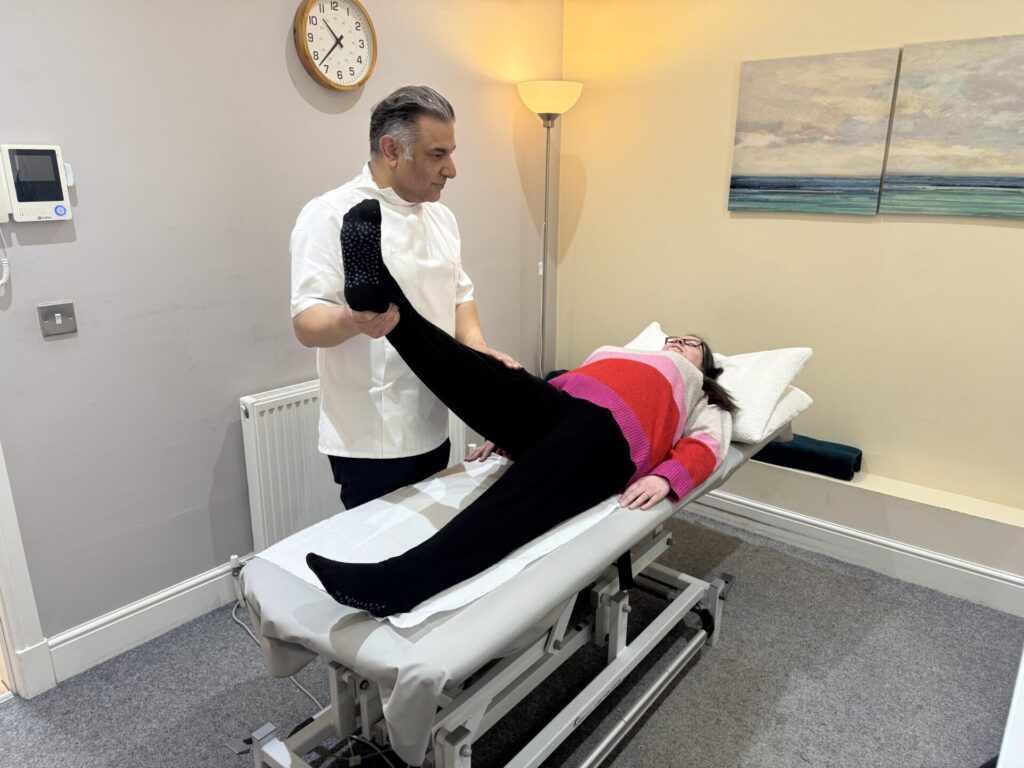
What Sciatica Usually Means
Sciatica is not a diagnosis on its own. It’s a collection of symptoms caused by irritation or compression of the sciatic nerve, which runs from the lower back through the buttock and down the leg.
Some people notice pain mainly when sitting, driving or bending. Others feel it more when walking or changing position. The pattern and severity can vary depending on what is irritating the nerve.
Why Sciatica Happens
There are a few common reasons the sciatic nerve becomes irritated. These can include changes around the lower spine, strain in surrounding muscles, or reduced movement that increases sensitivity in the area.
- Disc irritation or bulge in the lower back
- Joint restriction in the lumbar spine
- Muscle tightness in the hips or buttocks, including piriformis-related irritation
- Degenerative changes that affect the lower back over time
If your symptoms are mainly lower back discomfort without pain travelling into the leg, our Back Pain treatment page may be a better starting point.
How Osteopathy Can Help With Sciatica
Osteopathy aims to improve mobility and reduce mechanical irritation around the areas influencing the sciatic nerve. Your appointment begins with a thorough case history and assessment of movement, posture and neurological signs where appropriate.
Treatment may include:
- Gentle spinal mobilisation to improve movement
- Soft tissue techniques to reduce muscle tension
- Stretching and mobility work for tight areas
- Advice on posture, sitting positions and pacing activity
- Simple exercises to support recovery between visits
Where needed, we will discuss whether further investigation or referral is appropriate. The goal is to help you move more comfortably, settle sensitivity and build confidence returning to normal activity.
What to Expect at Your Sciatica Appointment
Your first appointment includes a detailed assessment. You may be asked to remove some outer clothing and perform simple movements to check mobility through the lower back, pelvis and hips. If your symptoms suggest nerve involvement, we may also assess reflexes, strength and sensation.
We’ll take account of your work, lifestyle and activity levels, then agree a plan that fits your situation. You’ll usually receive guidance on movement, pacing and home exercises alongside hands-on treatment.
For appointment length and pricing, please see our Fees & Offers page. We are recognised by Aviva, Bupa, Vitality and AXA PPP.
When Sciatica Needs Urgent Medical Advice
Sciatica can be very painful, but many cases improve with appropriate care. If you experience any of the following symptoms, you should seek urgent medical advice by contacting your GP, calling NHS 111 or attending A&E.
- Loss of bladder or bowel control
- Rapidly worsening leg weakness
- Numbness in the saddle area
- Severe pain following significant trauma
What Our Patients Say


Sciatica Appointments in Glasgow, Paisley and Lenzie
If pain down the leg is affecting your sleep, concentration or ability to move normally, early assessment may help you understand what’s driving your symptoms and what needs to change to support recovery.
Appointments are available at our clinics in Glasgow city centre, Paisley and Lenzie.